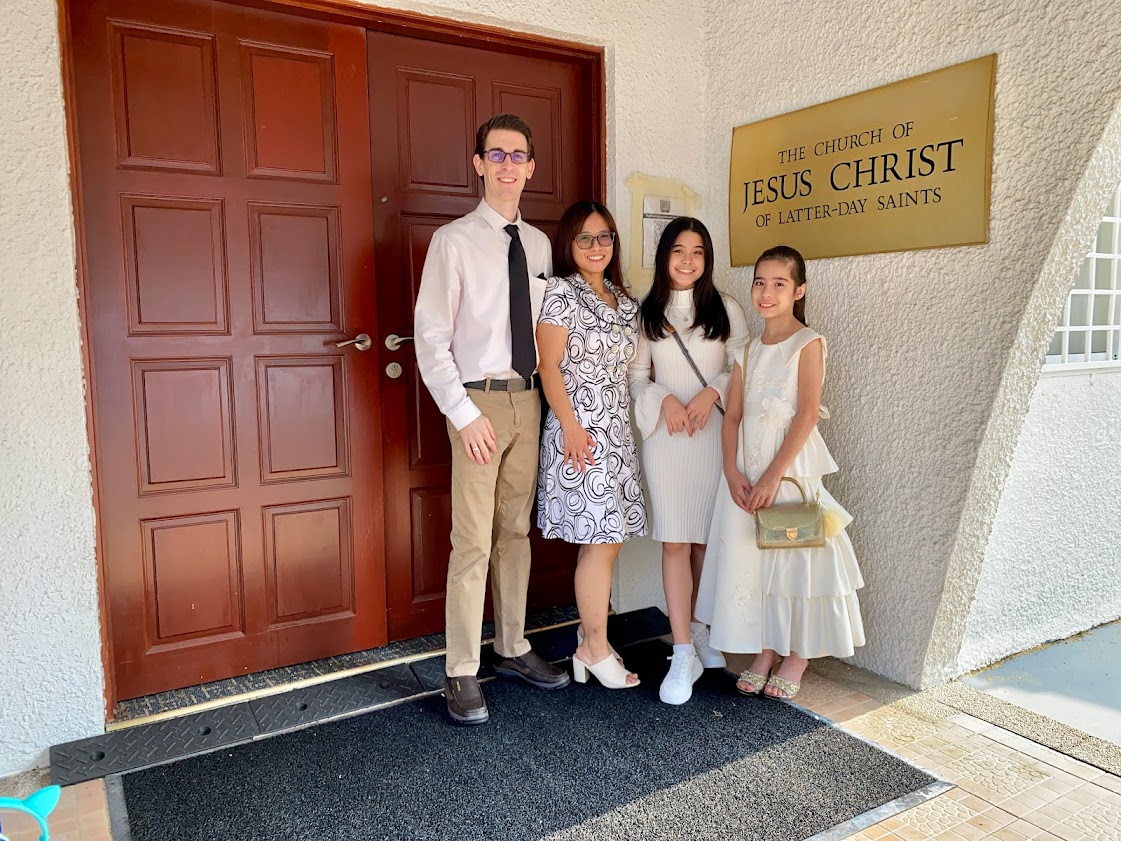
Friday, 8 April 2016

God, gods and godliness

This is one post in an A-Z series of 26 where I am writing about living as a Mormon in the wilderness of Kuantan


A key part of Mormon doctrine revolves around God, gods and godliness. We are the spirit children of God. We may one day become gods, like God. Despite this, we know but little regarding godliness.

I understand that such a claim goes against conventional Christianity whereby God is typically portrayed as a spirit who has no form or feelings and cannot be understood. He is untouchable, the only Deity under heaven. None can be compared to Him without a raturous shout of 'blasphemy!' Jesus, the Holy Spirit and God are three parts of the same Being.

For me, God is an immortal, perfected Being. He is the one and only supreme Father figure. He created us, knows us personally, and feels as we feel. We can never attain the fulness of His knowledge and intelligence whilst here on earth.

The Mormon preposition that we can become gods in a future existence provides a small glimpse into godliness and our divine potential.

Things that are not fully explained in scripture or are hard to comprehend, or that have just not been revealed to us, are often referred to as 'mysteries.' The mysteries of godliness is one of the great quests that will consume our mortal existence and carry through to our future immortal sphere.

The human mind and imagination is frequently lifted to a sense of godliness, as represented through modern superheroes possessing god-like powers, such as Superman, Batman, Spiderman, Thor, and a whole host of others. There is glory waiting to be achieved in all of us.

I must admit though, it is quite an unnerving experience to cast our mortal minds upon the mystery of godliness, of the possibility of residing with God in a new epoch, and of receiving higher intelligence beyond what we are currently capable. This mystery also involves how the human race will be arranged in the life to come, what our work will be, who would be qualified to progress to godhood and how those qualifications can be met, both here as we are now, and as immortal beings at a future time and place.

This diagram represents Mormon understanding of the soul's journey through space and time including pre- and post-existences with God

As a Mormon, we have scriptures which mention such things, some in great detail like the assigning of people to their estate of glory in the future existence (Doctrine & Covenants 76), while some other aspects of godliness are of minimal detail or not mentioned at all.

Addressed to 'those who fear me' and 'those who serve me,' a fascinating piece of scripture says:

"And to them will I reveal all mysteries, yea, all the hidden mysteries of my kingdom from days of old, and for ages to come, will I make known unto them the good pleasure of my will concerning all things pertaining to my kingdom.

Yea, even the wonders of eternity shall they know, and things to come will I show them, even the things of many generations.

And their wisdom shall be great, and their understanding reach to heaven; and before them the wisdom of the wise shall perish, and the understanding of the prudent shall come to naught.

For by my Spirit will I enlighten them, and by my power will I make known unto them the secrets of my will - yea, even those things which eye has not seen, nor ear heard, nor yet entered into the heart of man."

(Doctrine & Covenants 76:7-10)


I am of the personal belief that anything is possible. I certainly do not limit God in His intelligence, power, wisdom, works or future plans for His children.


What is your God like? Who are your favourite superheroes and what god-like powers do they possess? How do you imagine the eternal existence after this earth life?

Thursday, 7 April 2016

Family versus church

This is one post in an A-Z series of 26 where I am writing about living as a Mormon in the wilderness of Kuantan


For all the uniting the Mormon church does, it also divides families. Families like my own. My mum joined the church but my dad decided not to. That has caused 30 years of division in our family. Missionaries knocked on our door, converted my mum, and inadvertently caused a lot of time and attention to be taken away from my dad and given to the church. That has been tough for him to take. But he never stopped us from attending church or its many meetings. I am thankful to both my mum for setting us up with a spiritual foundation, and for my dad who never prevented us from following our faith, even though it was not preferential for him.

Meetings seemingly too often in frequency, too long in duration, and too awkward in timing. I can attest to that. I have sat in meetings outside of the regular worship services and wondered why on earth I was there. Suffice it to say that all too often there was no apparent plan or order to these meetings, no focus or concentration on the purpose of the meeting, and ultimately no positive outcome or plan of action.

Of course, as long as freedom of choice is a human possibility, the church will never be able to keep everyone happy. Meetings will continue to be a divisive issue; part-member families will continue to be a divisive issue. It doesn't always continue in tension or end badly, but it does happen.

For the last 10 years I have been living in the wilderness and this has been one of the benefits - no meetings; more family time. It has been bliss. While there are some church meetings that just have to be done, people who need a helping hand, plans formulated for reaching out to others, the family is always the priority. We will not find love, loyalty or anything more important than in our own families.

The Mormon church produced a written statement on the family in 1995, which I fully endorse:


Elder Christoffersen, a top Church leader is quoted as saying, "In the beginning, the church was the family." 

And that's where we are now. 

One family nowhere near a meetinghouse. 

Back to the beginning. 

But a family nevertheless.


What things do you do to demonstrate to your family that they are the priority?

Wednesday, 6 April 2016

Enlightening Exchanges

This is one post in an A-Z series of 26 where I am writing about living as a Mormon in the wilderness of Kuantan


Facebook is one of the main ways I keep in touch with people of the same faith

The main way we communicate with other church members while living in the wilderness is through social media. Facebook, in particular, is a fertile ground for replacing what we miss in typical Sunday School lessons in a regular ward or branch.

I involve myself in enlightening exchanges with both members and non-members alike. Such exchanges sometimes delve into deep discussion and doctrine which enables me to both share my own unique language of understanding of gospel topics, and hear and take on board ideas, opinions and new perspectives from others.

These exchanges on facebook really represent  an important spiritual component of my life whilst tucked away in the wilderness. I'm extremely grateful for those who have taken similar amounts of time as I to share engaging and insightful comments on facebook which help mould my views and increase my perspectives.


How has social media enhanced your spiritual life?

Tuesday, 5 April 2016

Dress, Diet, Desires

This is one post in an A-Z series of 26 where I am writing about living as a Mormon in the wilderness of Kuantan


The Mormon Church outlines standards for its followers and invites them to adhere. The 3 most notable involve dress, diet and desires, otherwise known as Modesty, The Word of Wisdom, and the Law of Chastity. In order to enter a Mormon temple, for example, a candidate is questioned on their level of adherence to standards of dress, diet and desires.


DRESS
From the Church's own publication, "True to the Faith," we are presented with four areas of modesty including dress, grooming, language and behaviour. It revolves around us developing an understanding that the search for attention to self leads to pride and that ultimately our bodies are gifts from God, to Whom we should direct the attention. Which is why Kim Kardashian and Donald Trump don't go down well with Mormons.

Modesty is not given as a stringent law or commandment. It leaves a lot to individual choice, of us taking responsibility for our own virtue and consulting with God as to what course of action may be right for us.


DIET
Despite living in a spiritual wilderness far away from the noticing eyes of other Mormons, I have no inclination whatsoever to bow to peer pressure and 'have a drink.' This is a concept of health that doesn't require the church to tell me what my own mind determines. I just don't see the attraction in or benefit of alcohol and cigarettes.

The Word of Wisdom is however, neither exclusively specific nor deep in its scope of what we should or shouldn't consume. It leaves a lot to individual choice, of us taking responsibility for our own health and consulting with God as to what course of action may be right for us.

DESIRES
The Law of Chastity is the church's standards concerning our thoughts, words and actions. Mormons are to abstain from sex before marriage and are to enjoy having sex with their spouse, and spouse only, after marriage.

This law represents a sensible approach to handling our natural desires. How we carry out these requirements leaves a lot to individual choice, of us taking responsibility for our own sexual urges and consulting with God as to what course of action may be right for us.


CONCLUSION
Controlling our dress, diet and desires have physical benefits, but are also proposed to allow us to have a more personal relationship with God through being closer to the Holy Spirit. Being in a state of worthiness to receive impressions, promptings and guidance of the Spirit will increase the likelihood of our making good, positive decisions and will qualify us to receive light and truth in greater abundance.

Yet for all the suggestions, laws and commandments, not one of them can trump Decision. We are not robots and our ability to decide for ourselves is a power that we can either misuse or channel great strength from.


For behold, it is not meet that I should command in all things; for he that is compelled in all things, the same is a slothful and not a wise servant; wherefore he receiveth no reward.
Verily I say, men should be anxiously engaged in a good cause, and do many things of their own free will, and bring to pass much righteousness;
-D&C 58:26-27


How does individual choice, as opposed to being commanded in black and white, strengthen your resolve to live in worthiness of God's guidance?

Monday, 4 April 2016

Christ

This is one post in an A-Z series of 26 where I am writing about living as a Mormon in the wilderness of Kuantan


Mormons are Christians and we worship Christ. Joseph Smith spent his life translating, producing, defending and ultimately dying for the Book of Mormon, which book testifies of Jesus the Christ from cover to cover.

I belong to The Church of Jesus Christ of Latter-day Saints. The atoning work that Jesus Christ performed for all people, who both care deeply or don't give a damn, is of central importance to my faith. For without that, there would be no Christianity, no Mormonism, no purpose to this life nor hope for a future existence.

My family loves the New Testament section of the Holy Bible which contains the record of Christ's 4 years ministry on the earth. Every Christmas we read the second chapter of Luke which includes the fascinating account of Christ's birth. They are words of scripture that highlight the staggering change of the way we keep time. So special was Christ's birth, that we now measure time from this point. But these words also stir the imagination of the mind and yearnings of the soul to the necessity and divinity of the Christ-child.

I try to learn as much as I can about Christ, his teachings, and his church, and then attempt to follow them in the best and most personal way I can. Sometimes I fail miserably. Sometimes I succeed. I admire, honour and respect Jesus Christ who lived as close to perfect as anyone who has ever lived.

I am a Christian. I belong to a church whose name contains His. And like all denominations of Christians, I look to Jesus Christ as my ultimate ideal.


What makes you a Christian? How has Jesus Christ impacted your life? What are some of your favourite words or accounts of Christ?

Saturday, 2 April 2016

Book of Mormon

This is one post in an A-Z series of 26 where I am writing about living as a Mormon in the wilderness of Kuantan


We have this remarkable book, an ancient record of scriptural proportions. The Book of Mormon confirms our Biblical link to the Jews. The opening of the Book of Mormon occurs in Jerusalem around 600BC with a group of Jews going on an epic voyage through desert and sea which went unknown to the general population of Jerusalem, and unrecorded in the Holy Bible.

The Book of Mormon, therefore, would be of particular interest to Jews and Christians alike. To Jews due to this particular migration to the ancient Americas. To Christians as this record makes continuous mention of Jesus Christ throughout its 1,000 years of history, including a ministration of the Saviour on the ancient American continent after his resurrection.

Content aside, the Book of Mormon carries additional value as a testament to Joseph Smith's seership skills as the translator of an ancient document, and not the author of a fictional work. Don't get me wrong, there are many who cling to the belief that Mr. Smith made the whole thing up. Even if that was the case, it would still be an incredibly amazing feat to produce a 500-page, 1,000-year story in around 65 days! At worst, he is a master author; at best, an instrument in the hands of God.

Former BYU Professor, Hugh Nibley, offered this challenge to his students:

"Since Joseph Smith was younger than most of you and not nearly so experienced or well-educated as any of you at the time he copyrighted the Book of Mormon, it should not be too much to ask you to hand in by the end of the semester (which will give you more time than he had) a paper of, say, five to six hundred pages in length. Call it a sacred book if you will, and give it the form of a history. Tell of a community of wandering Jews in ancient times; have all sorts of characters in your story, and involve them in all sorts of public and private vicissitudes; give them names--hundreds of them--pretending that they are real Hebrew and Egyptian names of circa 600 b.c.; be lavish with cultural and technical details--manners and customs, arts and industries, political and religious institutions, rites, and traditions, include long and complicated military and economic histories; have your narrative cover a thousand years without any large gaps; keep a number of interrelated local histories going at once; feel free to introduce religious controversy and philosophical discussion, but always in a plausible setting; observe the appropriate literary conventions and explain the derivation and transmission of your varied historical materials.
"Above all, do not ever contradict yourself! For now we come to the really hard part of this little assignment. You and I know that you are making this all up--we have our little joke--but just the same you are going to be required to have your paper published when you finish it, not as fiction or romance, but as a true history! After you have handed it in you may make no changes in it (in this class we always use the first edition of the Book of Mormon); what is more, you are to invite any and all scholars to read and criticize your work freely, explaining to them that it is a sacred book on a par with the Bible. If they seem over-skeptical, you might tell them that you translated the book from original records by the aid of the Urim and Thummim--they will love that! Further to allay their misgivings, you might tell them that the original manuscript was on golden plates, and that you got the plates from an angel. Now go to work and good luck!
"To date no student has carried out this assignment, which, of course, was not meant seriously. But why not? If anybody could write the Book of Mormon, as we have been so often assured, it is high time that somebody, some devoted and learned minister of the gospel, let us say, performed the invaluable public service of showing the world that it can be done."


The Book of Mormon vindicates Joseph Smith's Prophethood. I have read it thoroughly over a dozen times and find no objection with adding it to the canon of sacred scripture.


What have you gained from the Book of Mormon? If you are not of the Mormon faith, would you consider reading it, if not for a spiritual conversion, at least for captivating religious history?

Friday, 1 April 2016

Atonement

This is one post in an A-Z series of 26 where I am writing about living as a Mormon in the wilderness of Kuantan


Considering that it is the most essential component of being a Christian, it is somewhat surprising relatively how little we know about the atonement of Jesus Christ.

The atonement of Jesus Christ is at the very heart of the message we learn, follow and share as Christians. We know what it is, but we struggle to grasp how it came to be.

The atonement is a series of events which can be separated into three main parts:

1) the suffering that caused Jesus to bleed form every pore
2) Jesus' death
3) Jesus' resurrection

Why was the atonement necessary?
Basically Adam and Eve messed up. Big time. There was a fruit that was keeping them alive indefinitely which they ate from the aptly-named Tree of Life. But as soon as they ate a forbidden fruit, it caused a change in their bodies which made them become mortal.

The atonement of Christ would act as the fruit of the tree of life which Adam and Eve once devoured. The atonement gives life indefinitely and reunites mankind with God and Christ. It enables us to live happily in a troubled world and points toward an eternal abode in the future.

Trying to fathom the details of the atonement
I can't comprehend how Jesus suffered in the terrible fashion he did on that historic night in Gethsemane. Nor can I come to terms with his awful death or begin to imagine by what power or phenomenon he was able to revive and become alive again.

Its implications for a life beyond the one we currently live are clear. But of the atonement's role in our everyday lives here and now? I spend significant time wondering about this. It may be fair to remark that every human endeavour which overcomes sin or struggle, and every genuine happiness, joy and contentment we feel here in a world that is punctuated by certain death, is directly attributable to the retrospective atonement of Jesus Christ.

As for a clear answer on how that is made possible - I don't know. And I'm fine with that. So I will keep searching.


How do you feel the atonement of Christ working for you?